As Bengaluru continues to grow, more homeowners are looking
beyond just aesthetics and asking a bigger question: how can my home be
built responsibly, efficiently, and sustainably? Sustainable construction
is no longer a niche choice — it's becoming a smart, practical decision for
both the environment and long-term cost savings.
Here's a look at the sustainable materials and design
practices shaping homes in Bengaluru today.
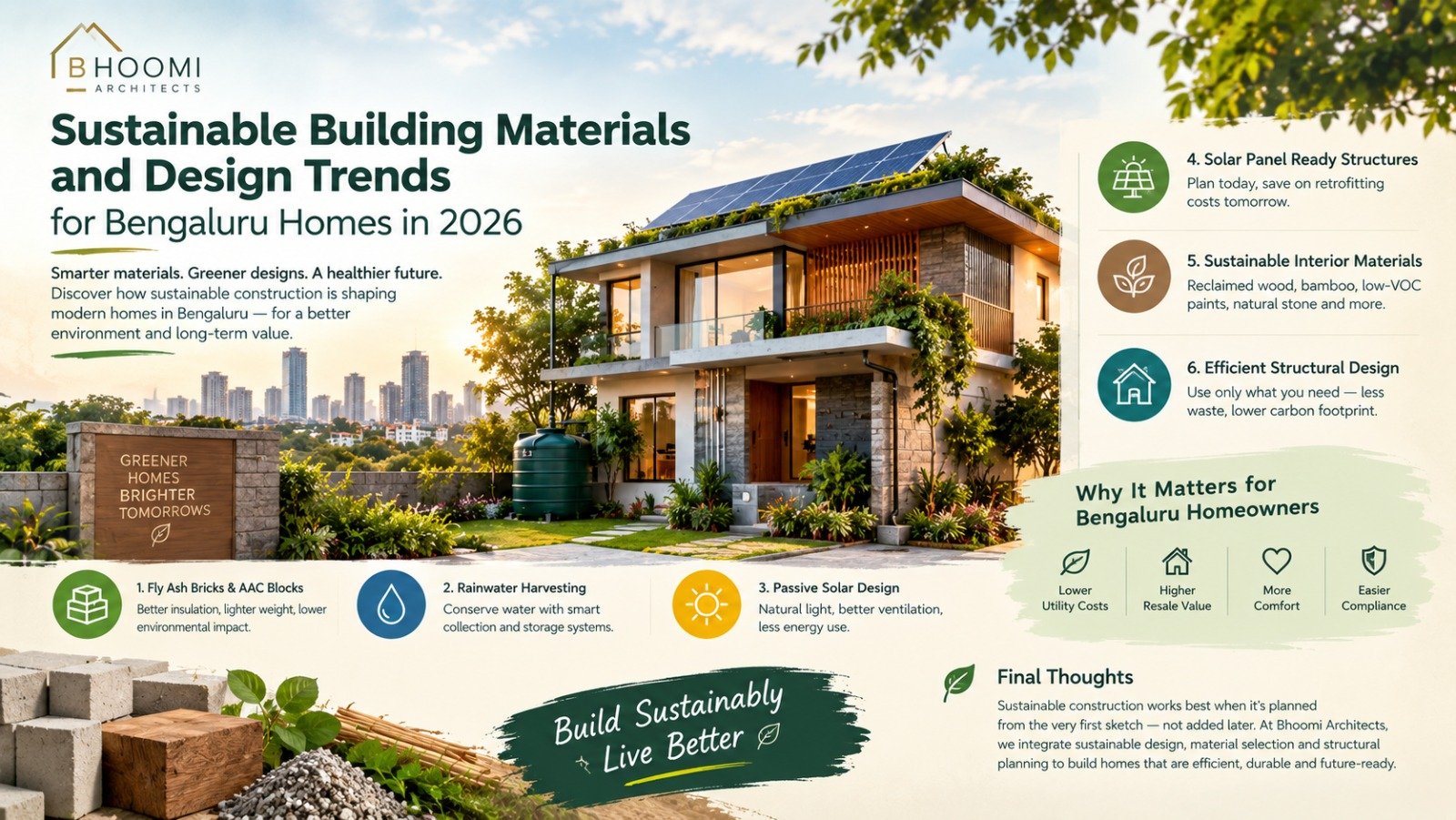
1. Fly Ash Bricks and AAC Blocks
Traditional red clay bricks are increasingly being replaced
by fly ash bricks and Autoclaved Aerated Concrete (AAC) blocks. These offer:
- Better
thermal insulation, keeping interiors cooler - Lighter
weight, reducing structural load - Lower
environmental impact during manufacturing
2. Rainwater Harvesting Integration
With Bengaluru's water scarcity concerns, rainwater
harvesting is no longer optional — it's essential. Thoughtful architectural
planning can integrate harvesting pits, recharge wells, and storage tanks
seamlessly into the site layout without disrupting design.
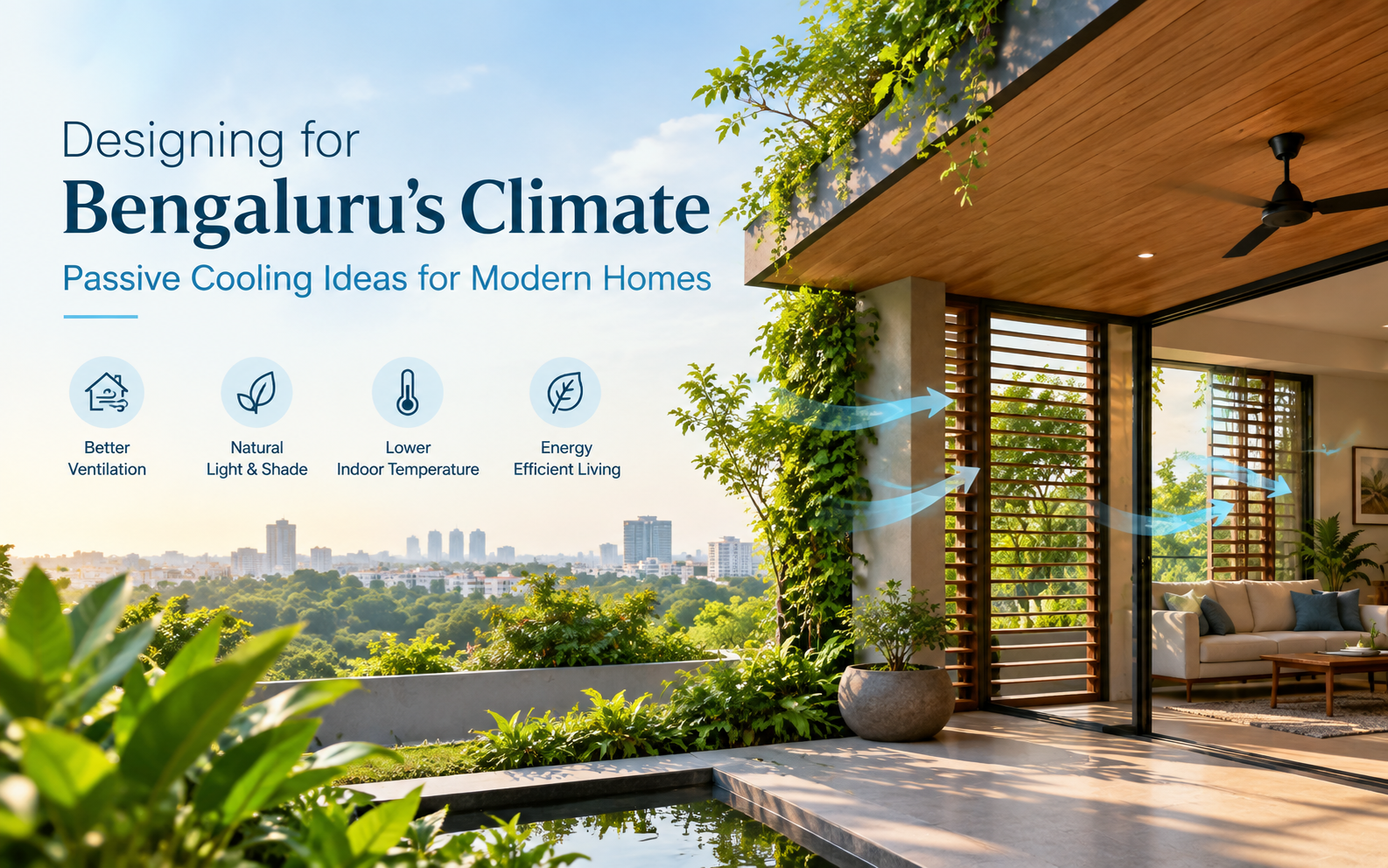
3. Passive Solar Design
Smart orientation of a building, along with well-placed
windows, overhangs, and ventilation paths, can significantly reduce dependence
on artificial lighting and cooling. This is one of the most cost-effective
sustainable strategies, since it's built into the design itself rather than
added later.
4. Solar Panel Ready Structures
Even if you're not installing solar panels immediately,
planning your roof structure and electrical layout to be
"solar-ready" saves significant retrofitting costs later. This is a
simple addition during the structural design phase.
5. Sustainable Interior Materials
From reclaimed wood and bamboo to low-VOC paints and natural
stone flooring, interior material choices are evolving. These options reduce
indoor air pollutants and often bring unique aesthetic character to a home.
6. Efficient Structural Design
Sustainability isn't only about materials — efficient
structural design that minimizes unnecessary concrete and steel usage while
maintaining safety standards also reduces the overall carbon footprint of a
project.
Why This Matters for Bengaluru Homeowners
Sustainable design isn't just an environmental choice — it
directly impacts:
- Long-term
utility costs – reduced electricity and water bills - Resale
value – sustainable homes are increasingly in demand - Comfort
– better insulation and ventilation mean more livable interiors - Compliance
– many approval authorities now encourage or mandate certain green
practices
Final Thoughts
Sustainable construction works best when it's planned from
the very first sketch — not added as an afterthought. At Bhoomi Architects, we
integrate sustainable design solutions, material selection, and structural
planning right from the concept stage, helping you build a home that's
efficient, durable, and future-ready.